Japanese learning blog
Find Japanese apps and explore vocabulary and grammar. App guides compare specific tools; tutorials explain usage with sentences and practice.
Japanese app recommendations
Compare flashcard, JLPT and kana tools by features, platform and cost.
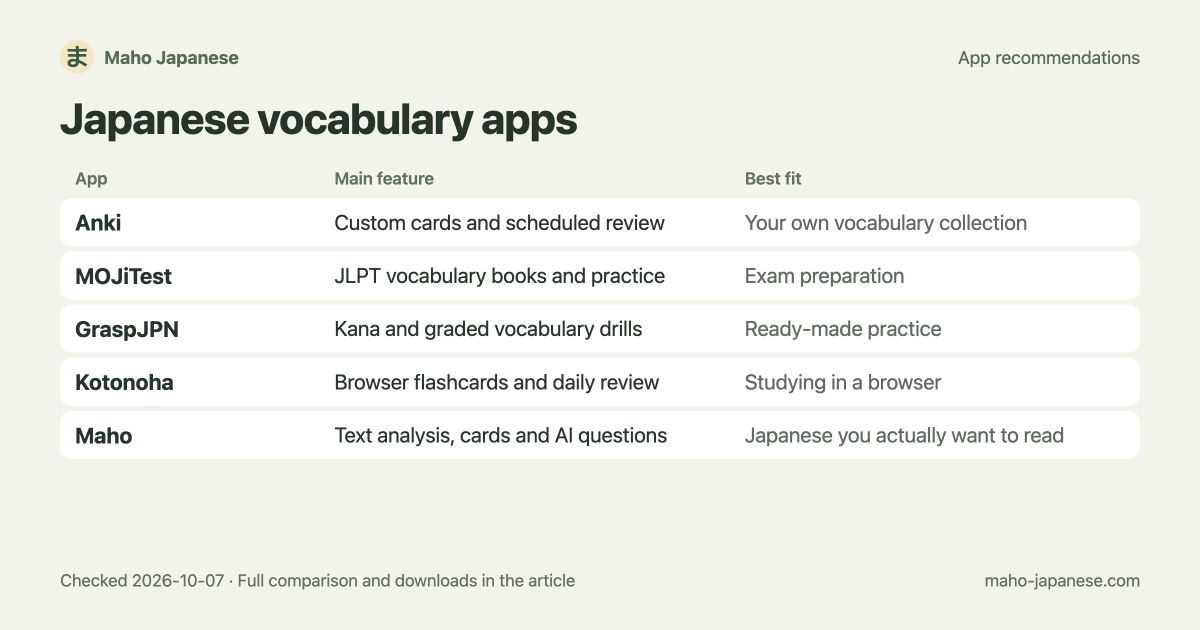
Japanese vocabulary apps: Anki, MOJiTest and 3 more compared
Which Japanese vocabulary app should you choose? Anki lets you build your own cards. MOJiTest and GraspJPN provide ready-made practice. Kotonoha works in a browser, while Maho helps you study words from material you want to read. Here is what each of these five options offers.
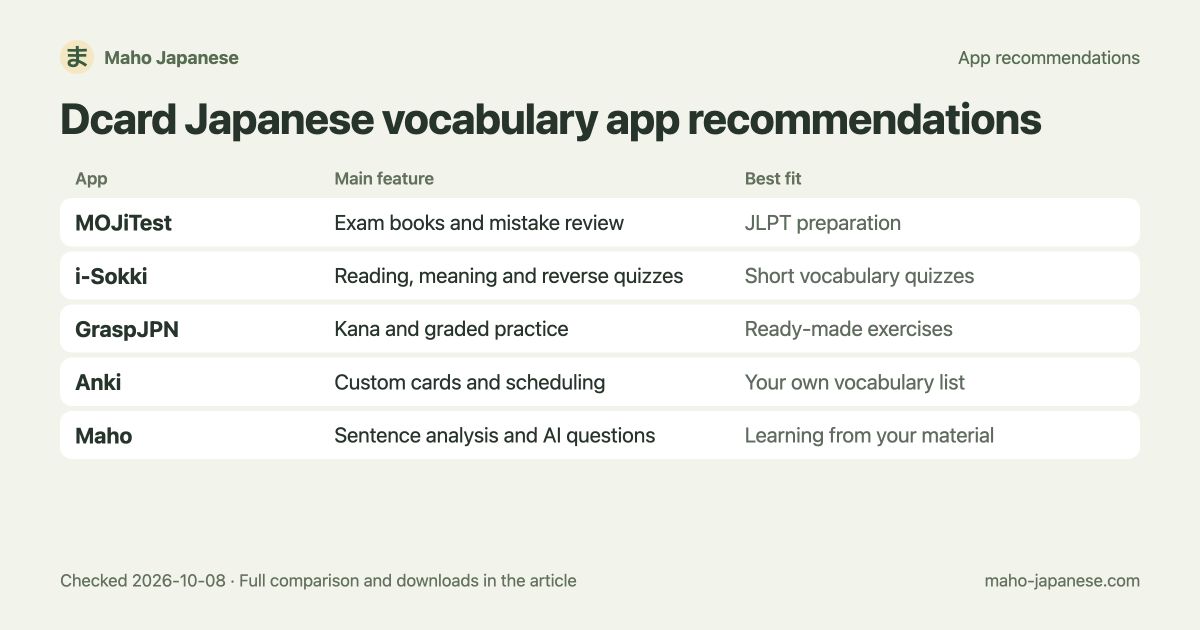
Dcard Japanese vocabulary app recommendations: 5 options compared
Looking for a Japanese vocabulary app for a commute or study break? MOJiTest focuses on exams, i-Sokki on vocabulary quizzes, GraspJPN on ready-made drills, Anki on custom cards, and Maho on learning from original material. Start with the comparison, then read about each app.
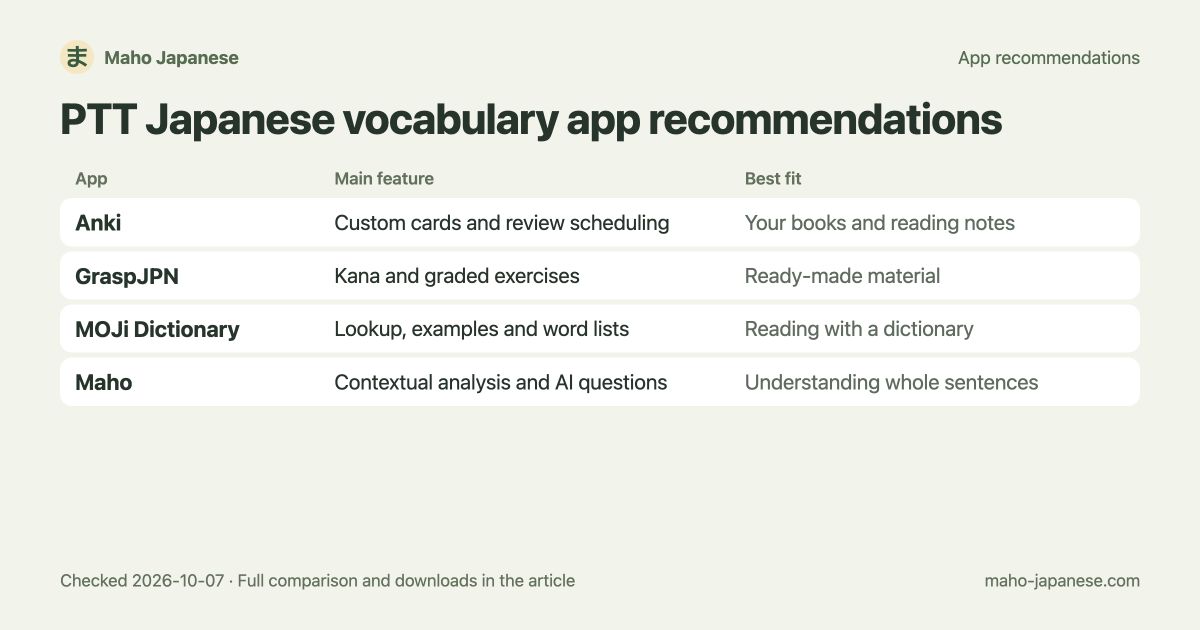
PTT Japanese vocabulary app recommendations: 4 apps compared
Looking for Japanese vocabulary apps in PTT discussions? Start with Anki for your own cards, GraspJPN for ready-made exercises, MOJi Dictionary for lookup and word lists, or Maho for sentence analysis and follow-up questions. Here is how these four options differ.
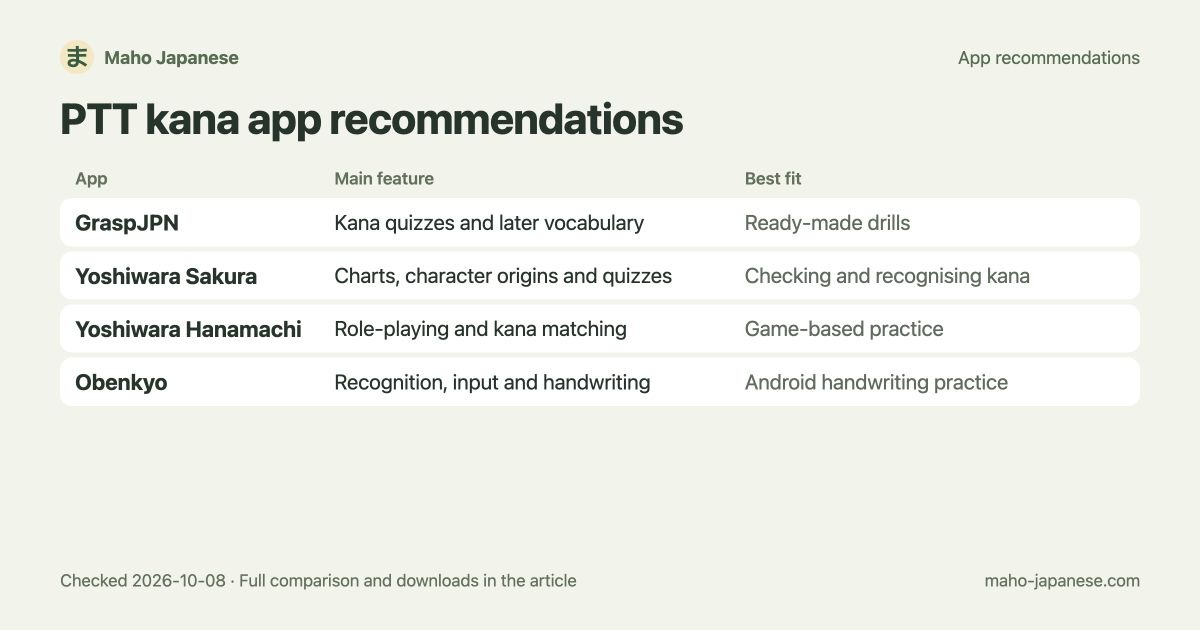
PTT kana app recommendations: 4 apps for learning hiragana and katakana
Which app can help you learn hiragana and katakana? GraspJPN offers quizzes, Yoshiwara Sakura provides charts, Yoshiwara Hanamachi turns practice into a game, and Obenkyo offers recognition and handwriting exercises on Android. Here is what each of the four apps does.
Japanese lessons and practice
Explore vocabulary and grammar in context, try a worked example, and check your answers.
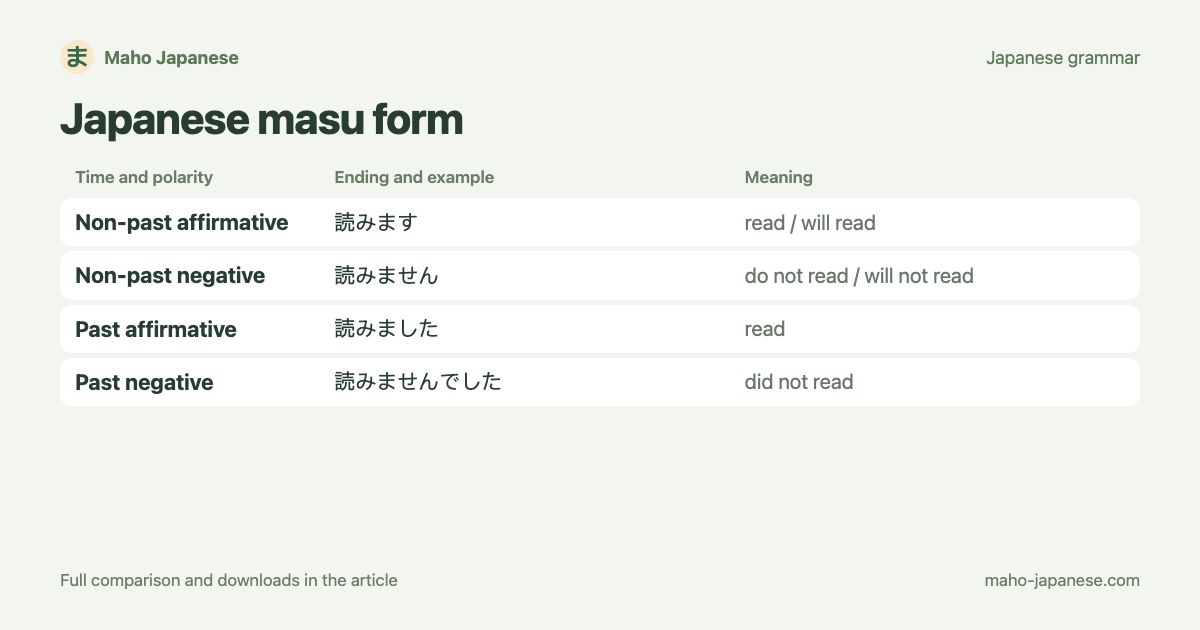
Japanese masu form: ます, ません, ました and ませんでした
読みます, 読みません, 読みました and 読みませんでした are the polite non-past affirmative, non-past negative, past affirmative and past negative forms of “read.” Choose the time first, then decide whether the sentence is affirmative or negative.
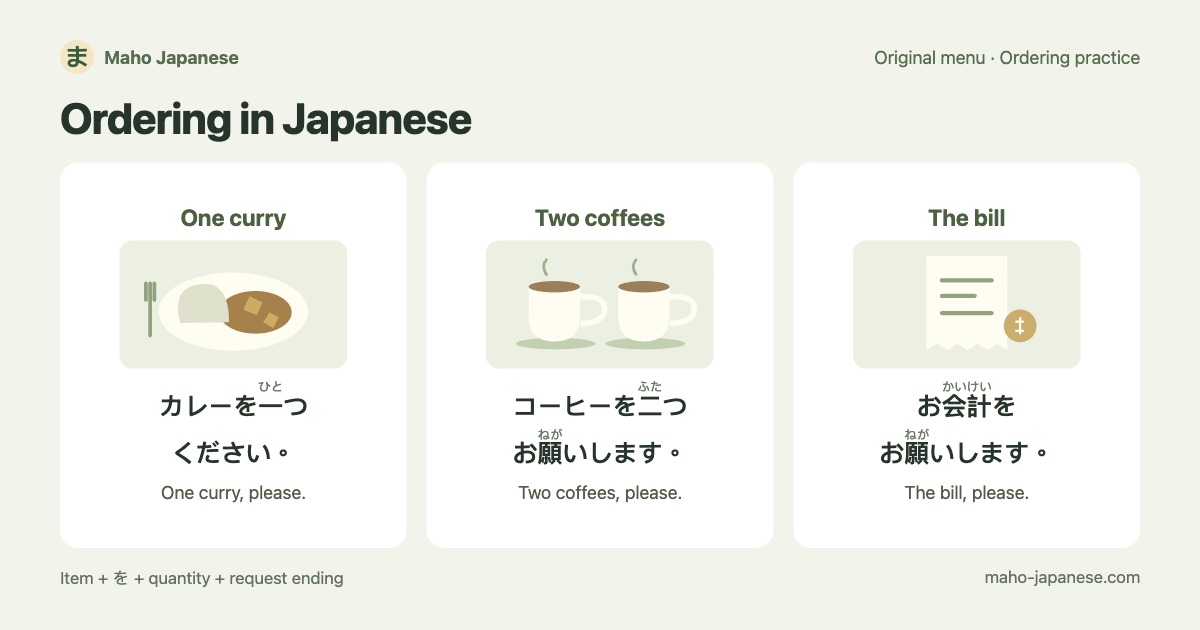
Ordering in Japanese: kudasai and onegaishimasu
Point to a menu item and say これをください。—“This one, please.” If you know its name, try カレーを一つお願いします。—“One curry, please.” Both ください and お願いします work for ordering. Start by making the item and quantity clear.
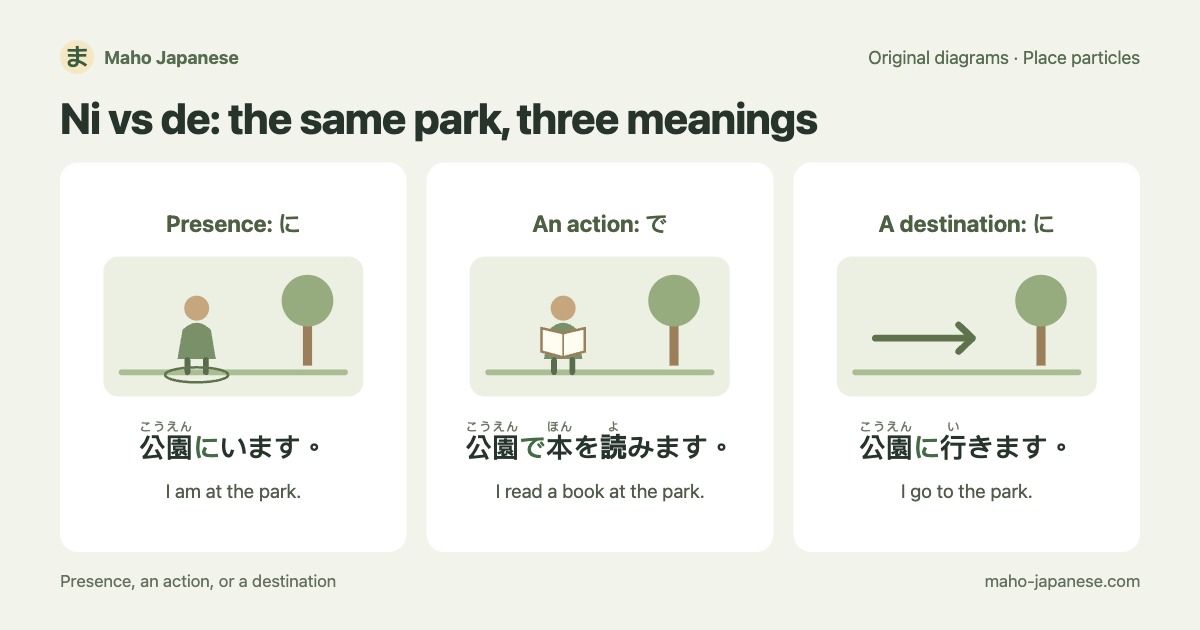
Ni vs de in Japanese: location, actions and destinations
Use に to locate a person or thing with います/あります, and で to say where an action happens. 公園にいます。 means “I am at the park”; 公園で本を読みます。 means “I read a book at the park.” For the destination in “I go to the park,” use に: 公園に行きます。
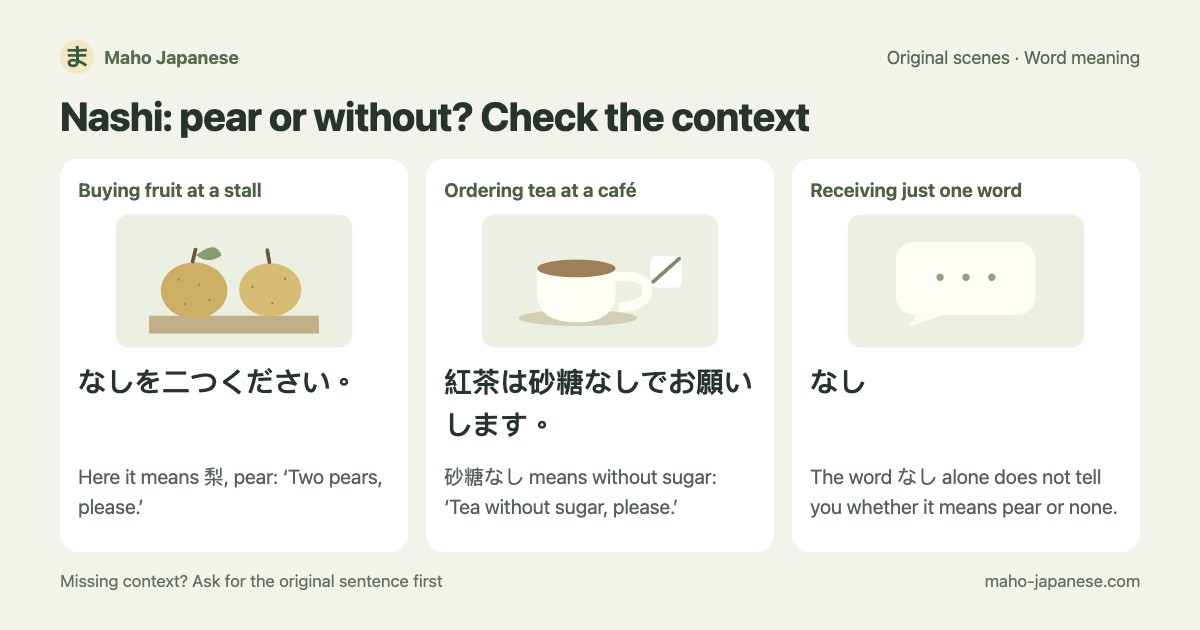
Nashi in Japanese: pear, none and without
Nashi can name a pear or express the absence of something. The fruit is written 梨; “none” or “without” can be written 無し. In 砂糖なし, it means without sugar. These are different words that share a kana reading, so use the whole sentence to choose the meaning.
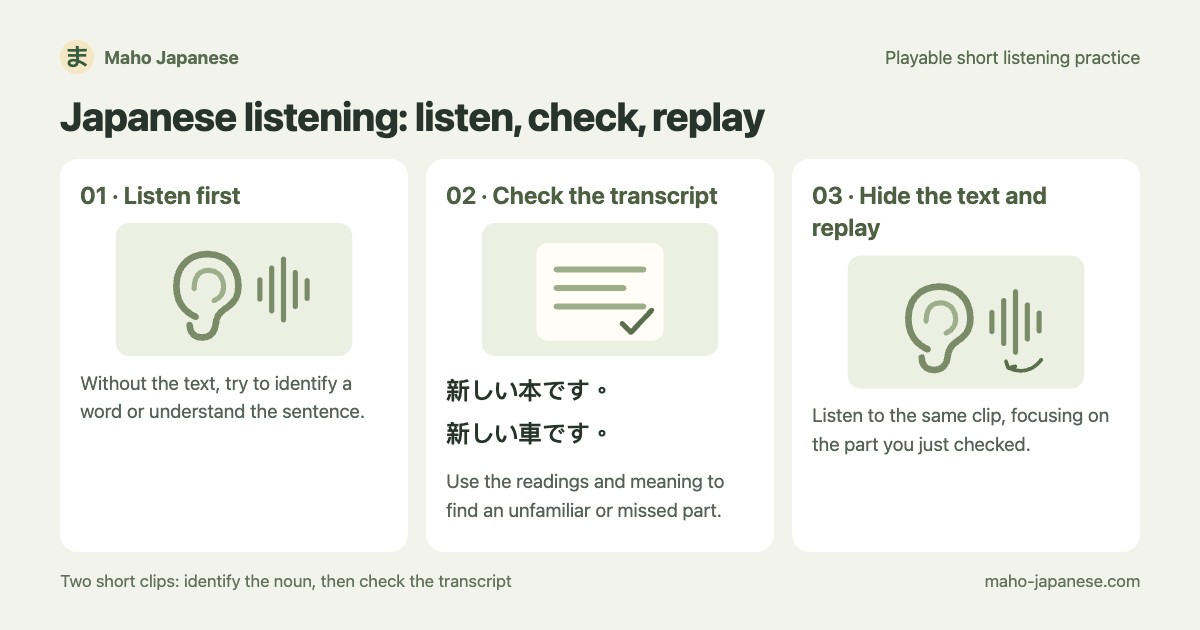
Japanese listening practice: short clips with transcripts
Try two beginner Japanese listening exercises with audio, kana readings, meanings and answers. Play a clip and choose the noun you hear, then open the transcript to check. Close the text and listen again, focusing on the part you missed.
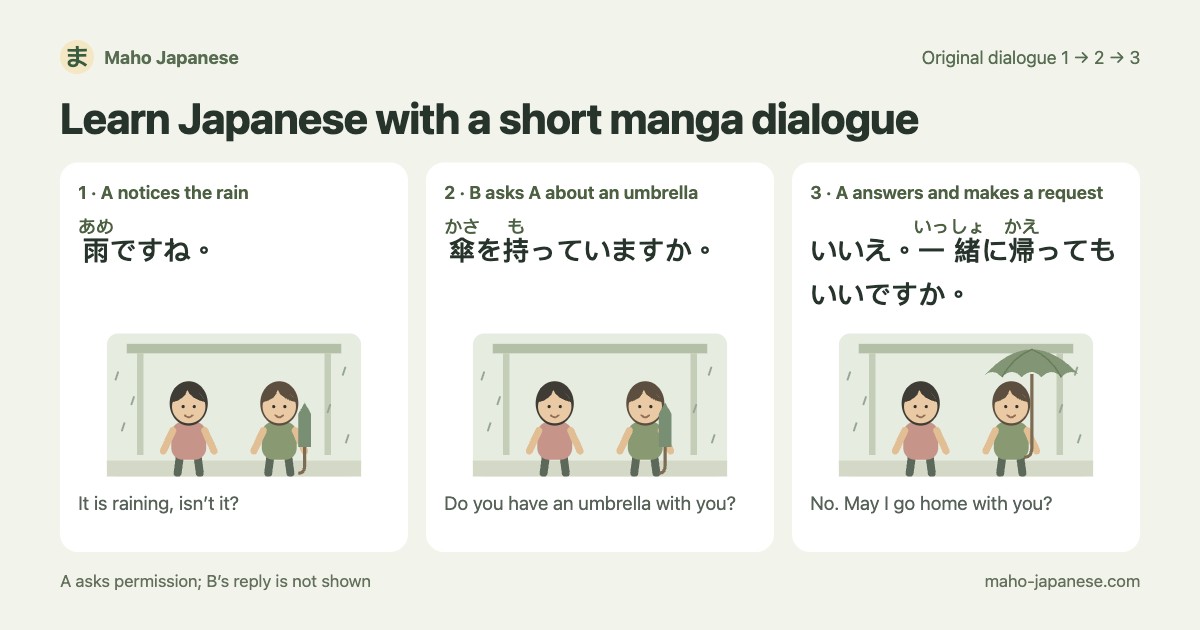
Learn Japanese with Manga: Dialogue, Vocabulary and Casual Forms
Start with a short manga conversation: identify the speakers, read the words in context and expand a casual contraction. This original three-panel scene about rain and an umbrella lets you reveal translations, unpack a sentence, compare polite and casual forms, then answer two questions.
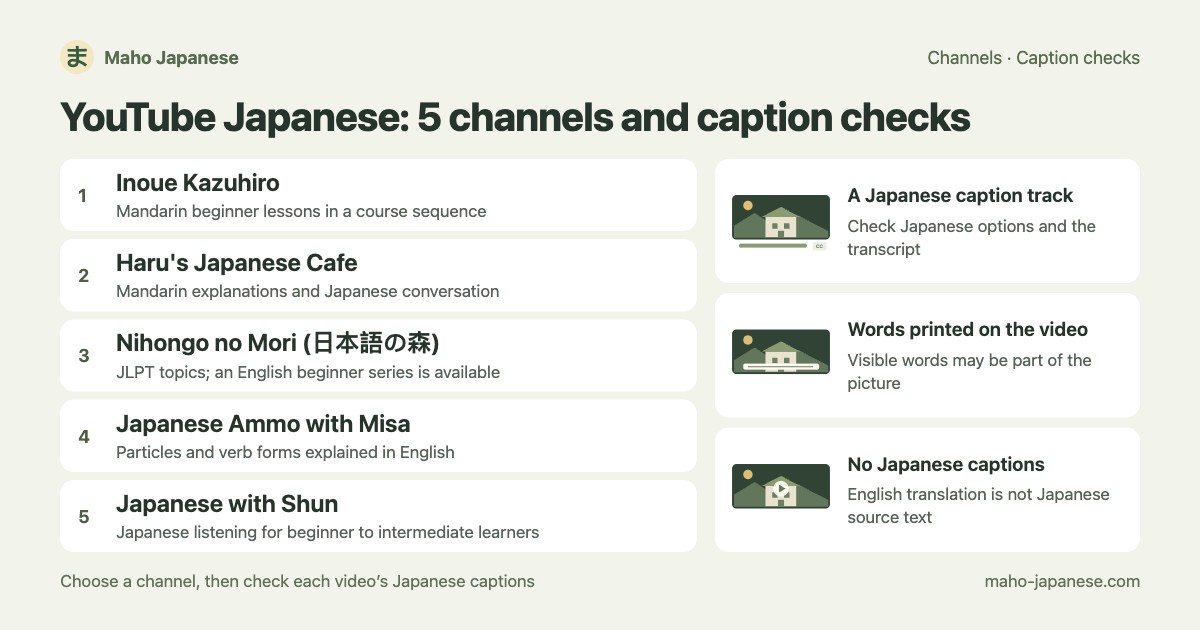
5 YouTube Channels to Learn Japanese, with a Caption Study Guide
Start with Japanese Ammo with Misa for English grammar explanations, Japanese with Shun for beginner listening, or Nihongo no Mori for JLPT topics. Inoue and Haru also offer lessons explained in Mandarin. This guide compares all five, gives you an entry point for each, then shows how to check captions before bringing a video into Maho.
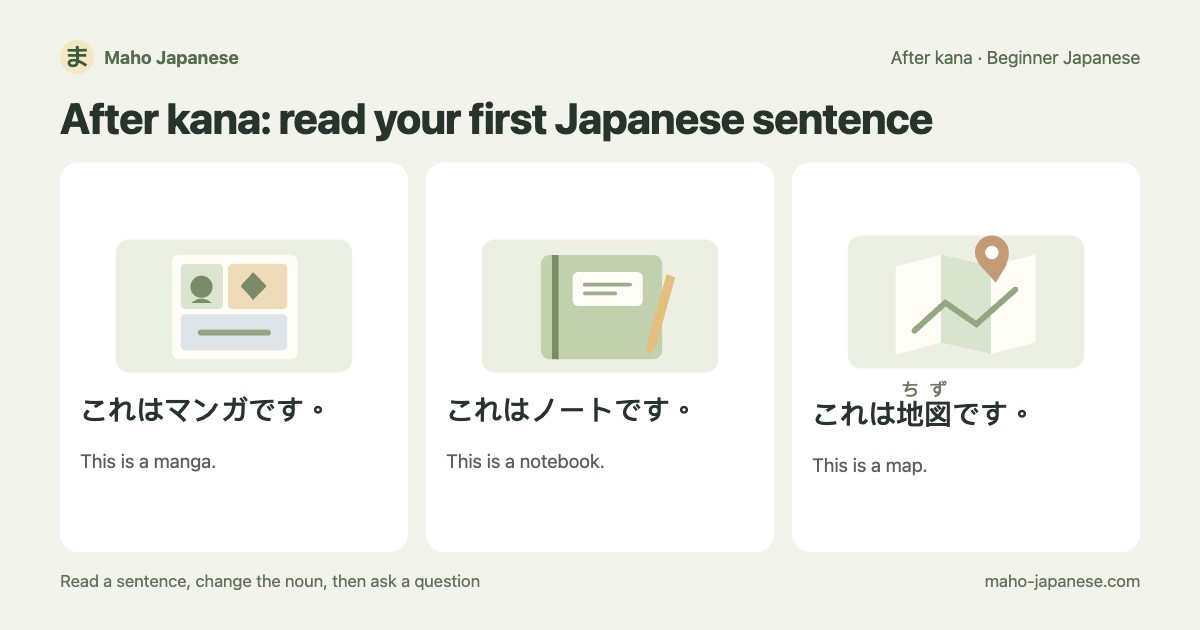
After hiragana and katakana: read your first Japanese sentence
Start beginner vocabulary and grammar together, then practise reading short sentences. You do not have to finish a vocabulary list before reading a sentence. Today, read “This is a manga,” change the noun, and ask “Is this a manga?” Try it below.
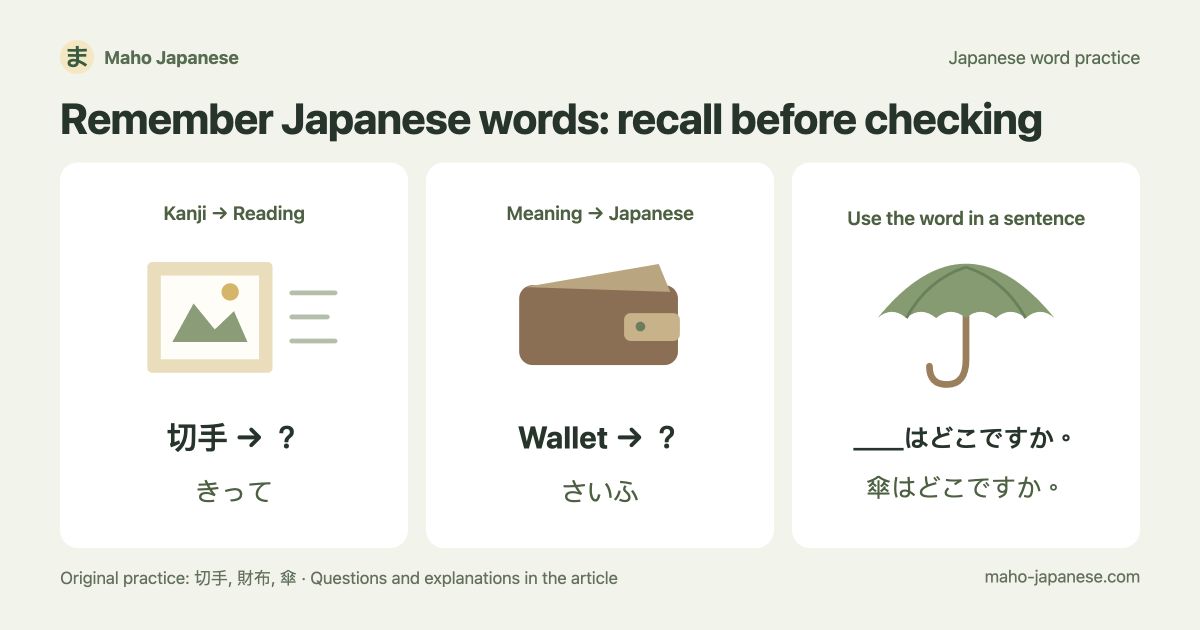
Remember Japanese words with recall and examples
Learn a word’s reading, meaning and sentence together, then try to recall an answer before checking it. Recognising 財布 as “wallet” is one task; producing さいふ is another. These three everyday words help you see whether you need more practice with readings, recalling Japanese, or using a word in a sentence.
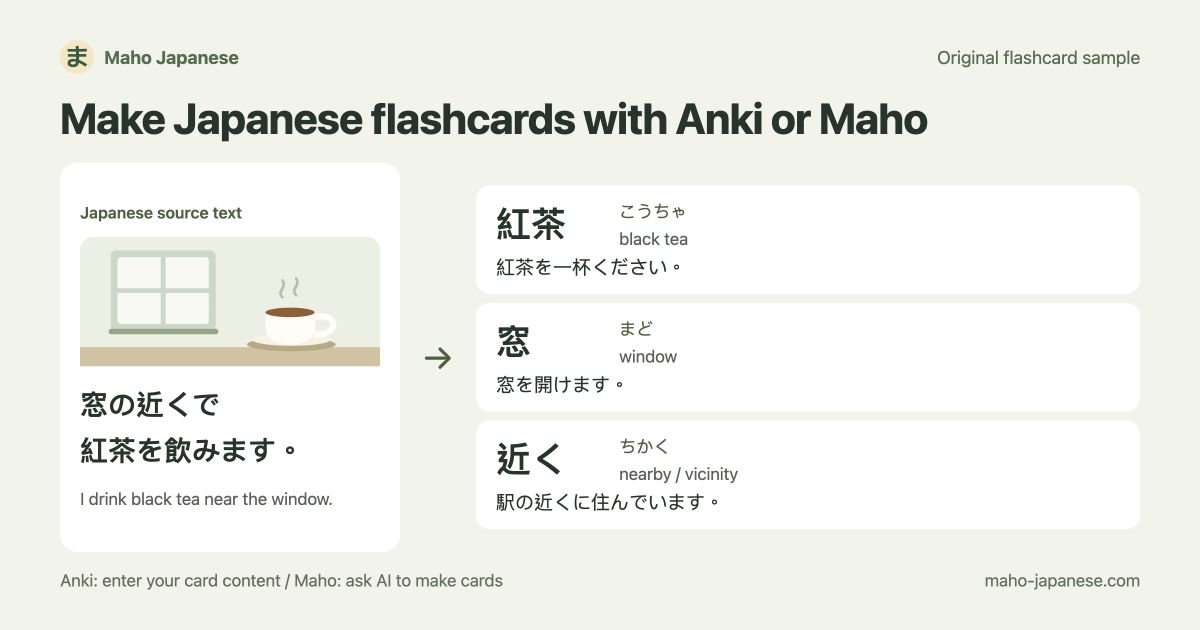
Make Japanese flashcards with Anki or Maho
In Anki, you enter the word, reading and example yourself, then let the app schedule reviews. In Maho, you can ask AI to make cards from Japanese you are reading and revisit them in your notebook. This guide walks through each workflow, followed by a comparison of features, platforms and costs.
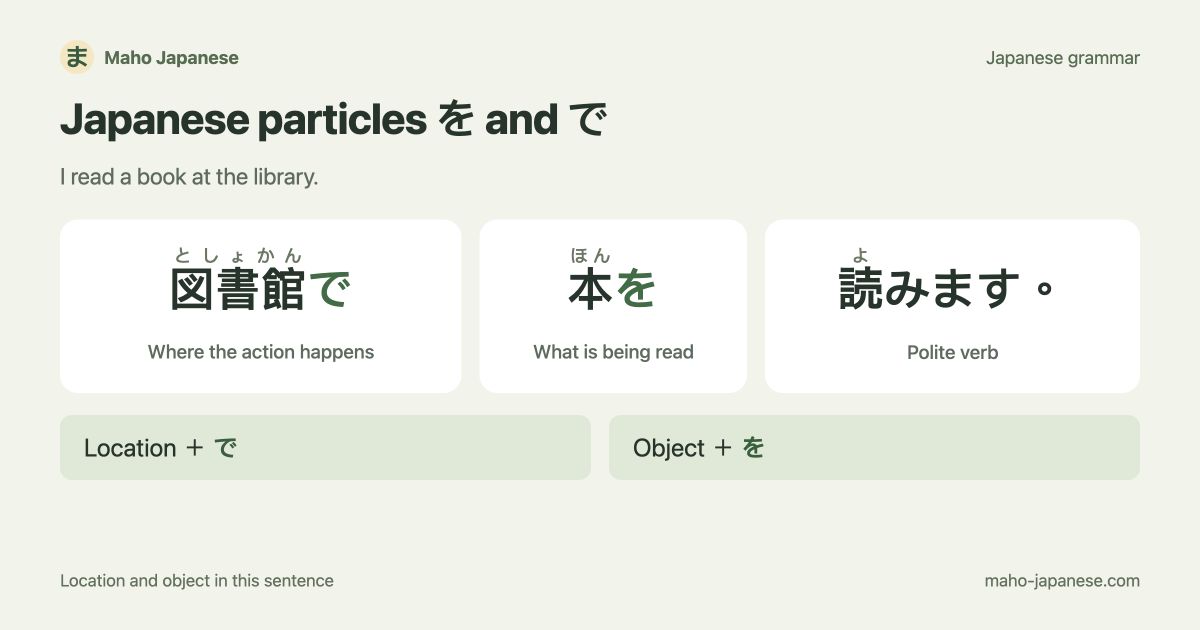
Japanese particles を and で: one sentence, two useful roles
Knowing each word’s translation does not always make a sentence clear. Start with the action, its object and its location. We will practise one common use of these particles, then change the sentence to fit your life.